
Water heater repair · Bethlehem, PA
Water Heater Repair in Bethlehem: Cold Showers, a Wet Floor, Pilot Trouble
A water heater fails in one of three ways: it stops heating, it makes noise, or it leaks. The first two can often be repaired. A tank that leaks from its body usually cannot.
Call dispatch and describe which of the three you have. Dispatch hands it to a plumber in our network who works on gas, electric and oil-fired units.
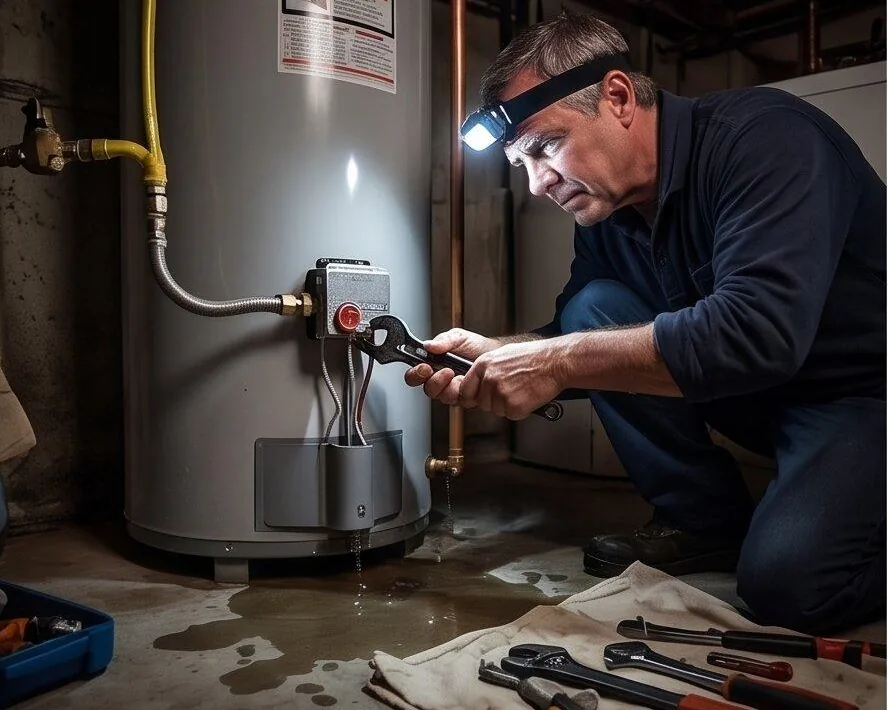
No hot water, lukewarm water or water on the floor: sort the symptom first
The symptom tells a plumber where to start, so it helps you to start there too. Look at the heater before the call and note what you see.
| What you notice | Common cause | What to do first |
|---|---|---|
| No hot water at all | Gas: pilot or igniter out. Electric: tripped breaker or failed element. | Check the breaker or the pilot window, then call. |
| Water warms and then goes cold | A worn heating element, a thermostat fault or sediment on the tank floor. | Note how long the hot water lasts and tell dispatch. |
| Rumbling or popping from the tank | Sediment baked onto the bottom, with water trapped beneath it. | Book a flush before the tank begins to leak. |
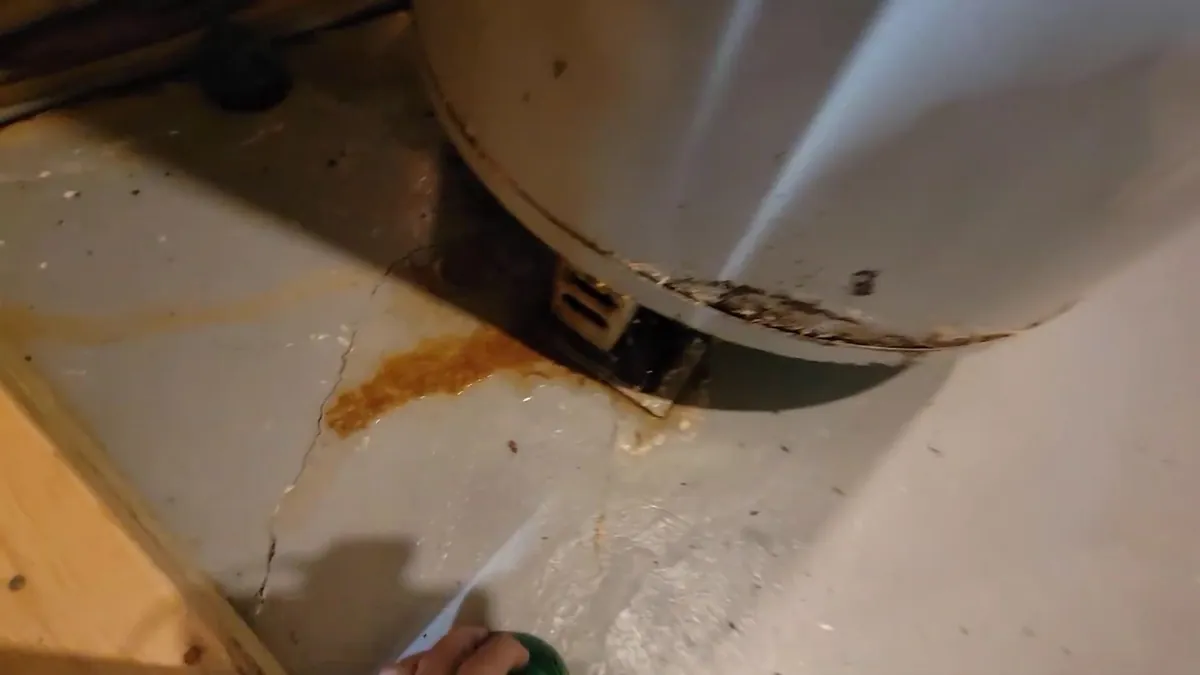
| Water pooled at the base | A leaking fitting, a relief valve discharge or the tank itself. | Shut off the water supply at the heater and photograph the leak. |
| Rusty or smelly hot water | A tired anode rod or corrosion inside the tank. | Describe the color and smell to the plumber. |
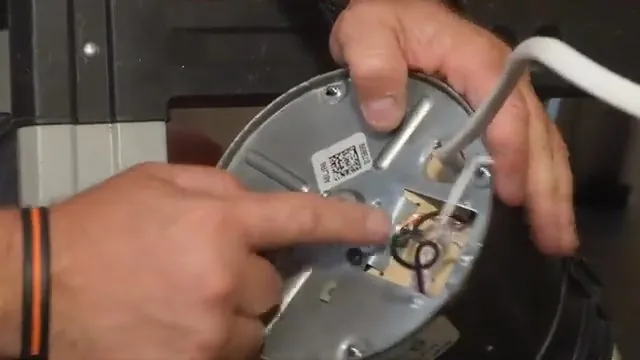
No hot water in freezing weather, or water spreading across the floor, is an emergency. Call at any hour.
A leaking tank is not the same as a leaking fitting
Water under a heater can come from the pipes above it, from the relief valve or from the tank shell. A dripping fitting or valve is a repair. A tank that seeps from its seam or its base has corroded through, and no patch will hold.
Dry the area, then wrap a dry paper towel around each connection and watch for a damp spot. If the water appears from under the jacket, the tank is finished.
If the heater is leaking now: turn the cold-water supply valve above the heater to off, switch the electric breaker off or turn a gas control to its lowest setting, and call dispatch. If the floor is wet, see the water damage page for the first-hour steps.
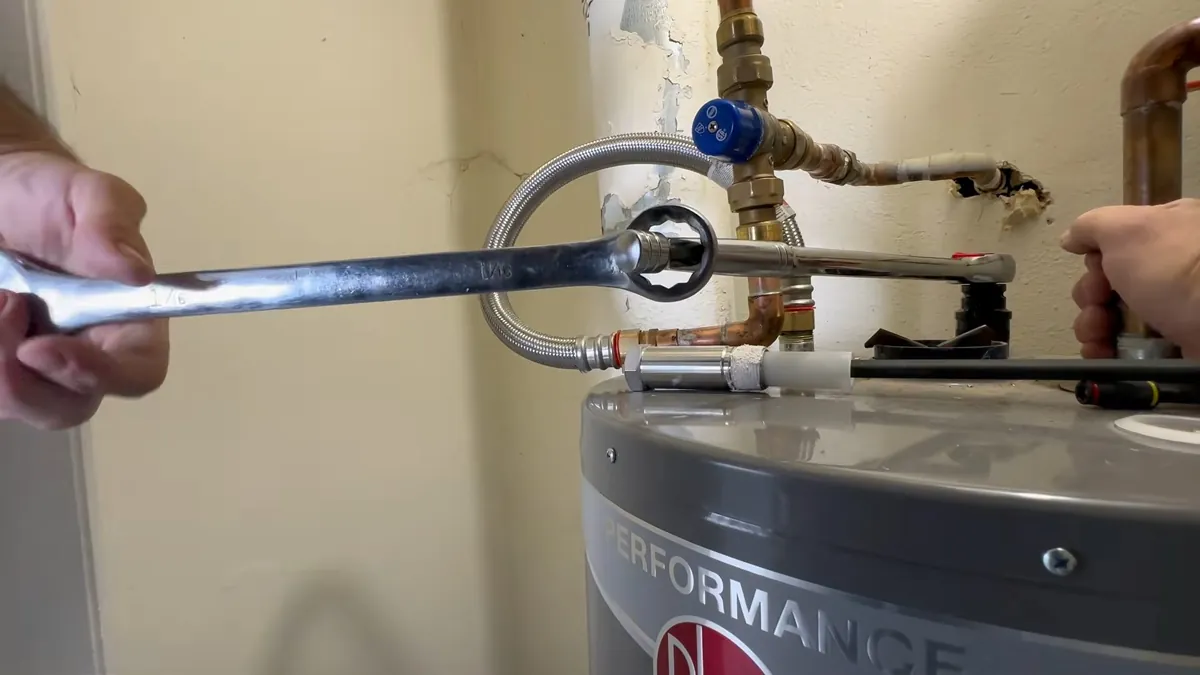
Gas, electric or oil-fired: what to tell the plumber
The fuel decides which parts can fail. Say which one you have when you call, and say so if you are not sure.
| Fuel | Parts that usually fail | Notes for the call |
|---|---|---|
| Natural gas | Pilot assembly, thermocouple, igniter, gas control valve, flue draft. | A gas smell is a leave-the-house call to UGI or 911 before anything else. |
| Electric | Heating elements, thermostats, high-limit reset, wiring. | Turn the breaker off before anyone opens a panel. |
| Oil-fired or other | Burner, nozzle, controls and a flue that needs cleaning. | Say so on the first call so the right plumber is sent. |
A pilot that keeps blowing out is not a nuisance. It often means a draft problem in the flue or a failing part. Relighting it over and over without finding the cause is how a small repair becomes a carbon monoxide scare.
Gas odor near the heater means everyone goes outside first. Dial 911 or phone the gas utility from the street, and wait for clearance before you call dispatch. The numbers and the full steps are on the gas line page.
Gas odor guidance: UGI leak safety page, read 2026-10-30.
Flushing, sediment and the noises a tank makes
Every tank collects sediment, because water carries fine particles that settle. The layer insulates the burner or element from the water, so the heater works harder and the tank bottom runs hot. That is where the rumbling and popping come from.
A flush draws the sediment out through the drain valve. It works best on a tank that has been flushed before. On an old tank that never was, the drain valve can clog or leak once it is opened, so ask the plumber before you try it yourself.
- Rumbling or popping when the burner or element runs: sediment.
- A high-pitched hiss or whine: a partly closed valve or scale on an element.
- Ticking from the pipes after a cycle: pipes expanding as they heat, usually harmless.
- Dripping from a pipe on the side of the tank: the relief valve, which should be checked.
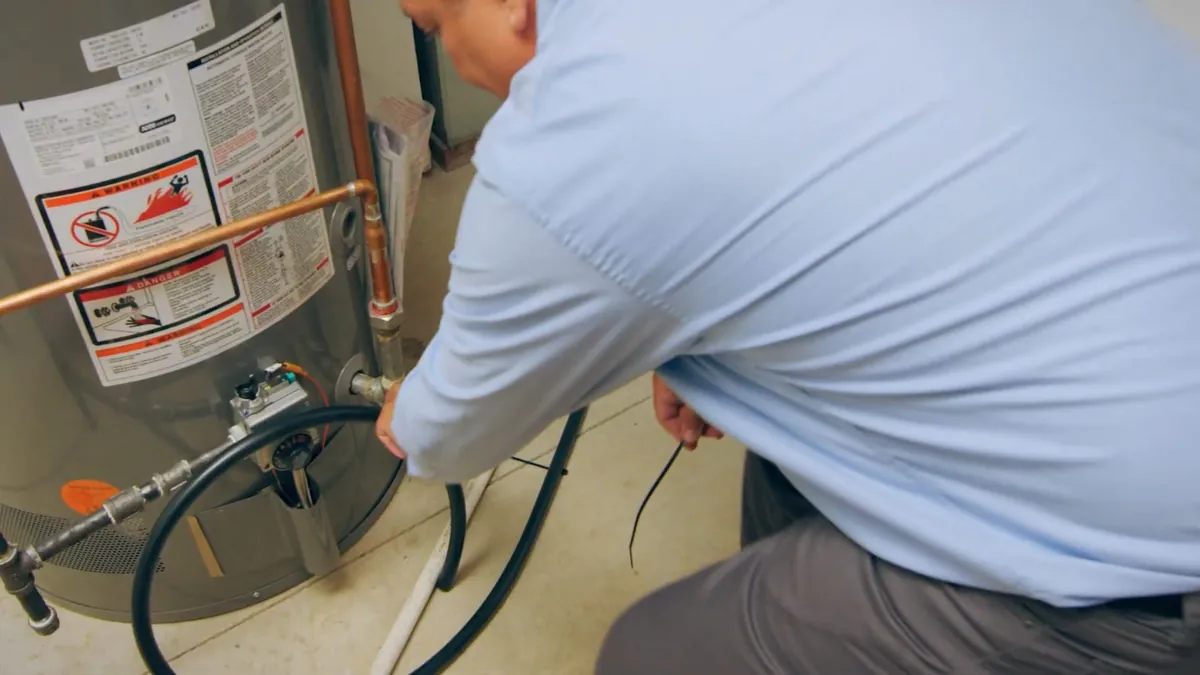
Repair or replace: age, rust and repeat visits
Tank water heaters wear out. The question for any call is whether this repair buys years or only weeks. A new element or a thermostat on a tank in good shape is sound sense. A new element on a rusted tank is not.
- Ask how old the unit is. The data plate gives a serial number that dates it.
- Ask whether the tank body shows rust, weeping seams or a damp base.
- Ask what the same repair will cost next year if a second part fails.
- Ask what a replacement involves in your home: venting, a new expansion tank, permits.
If the answer points toward replacement, the installation page covers sizing, fuel changes and permits. Many owners also ask whether to move to a tankless unit at that point, which the same page links to.
Permits for a repair or a swap
Bethlehem's plumbing permit application lists water heater work, and the City publishes monthly permit lists that include water heater replacements. The Contractor Information page does not say in plain words that every repair needs a permit.
Ask the plumber whether a permit is pulled for your job. If it is, ask who files it and when the inspection happens. In other towns the borough or township office decides, so confirm with them.
Source: City of Bethlehem plumbing permit application and monthly permit lists. Read 2026-10-30.
A repair of one part rarely changes the installation, while a swap may. If the plumber proposes replacing the unit, ask whether the venting, the gas line or the electrical circuit will change, because those are the changes most likely to need approval.
Keep the permit number, if one is issued, with a photo of the water heater's data plate. Both help at a future sale or an insurance claim.
Water heater questions Bethlehem homeowners ask
How long do water heaters last?
A tank water heater commonly lasts around a decade, and some go longer, but the range depends on the tank, the water and how often it was serviced. The data plate has a serial number that dates the unit. If it is old and the tank body is rusted or damp, plan for a replacement rather than a series of repairs.
Why is my water heater not heating?
On a gas unit, check whether the pilot is lit. On an electric unit, check the breaker. If those are fine, a worn element, a thermostat fault or a failed igniter is the next suspect. If a gas smell is present, get outside and phone UGI or 911 before anything else. Then tell dispatch what you saw.
Should I flush my water heater?
A flush removes sediment and is a sensible maintenance step for a tank in good shape. On an older tank that has never been flushed, opening the drain valve can cause it to leak, so ask the plumber whether it is worth doing. Do not flush a tank that is already leaking.
Why is my water heater making noise?
Rumbling and popping usually mean sediment on the bottom of the tank, where trapped water boils and bubbles up through it. A hiss or whine can point to a partly closed valve or scale on an element. The noise is a warning. A plumber can flush the tank or test the parts before something fails.
Does it matter if a tank is tall or short?
Only for fit. A tall tank holds the same amount as a short one of the same capacity, but it needs head room and the flue or vent must reach the right place. If the heater sits in a low closet or under stairs, give the plumber the measurements before a replacement is ordered.
No hot water in Bethlehem?
Call (610) 904-7596. A dispatcher answers, asks where you are and what is happening, and sends the call to a plumber in our network serving your area. Plumbers are independent and responsible for their own work.