Tankless water heater · Bethlehem, PA
Tankless Water Heater in Bethlehem: Retrofit Work, Repairs and Flushing
A tankless heater makes hot water as it is used, so there is no tank to run out or leak. It also needs a larger gas supply, venting and a drain path that many older houses were not built for.
Call dispatch for a repair, an error code or a conversion from a tank. A plumber in our network will say what the house needs before the work is planned.
Is tankless right for this house?
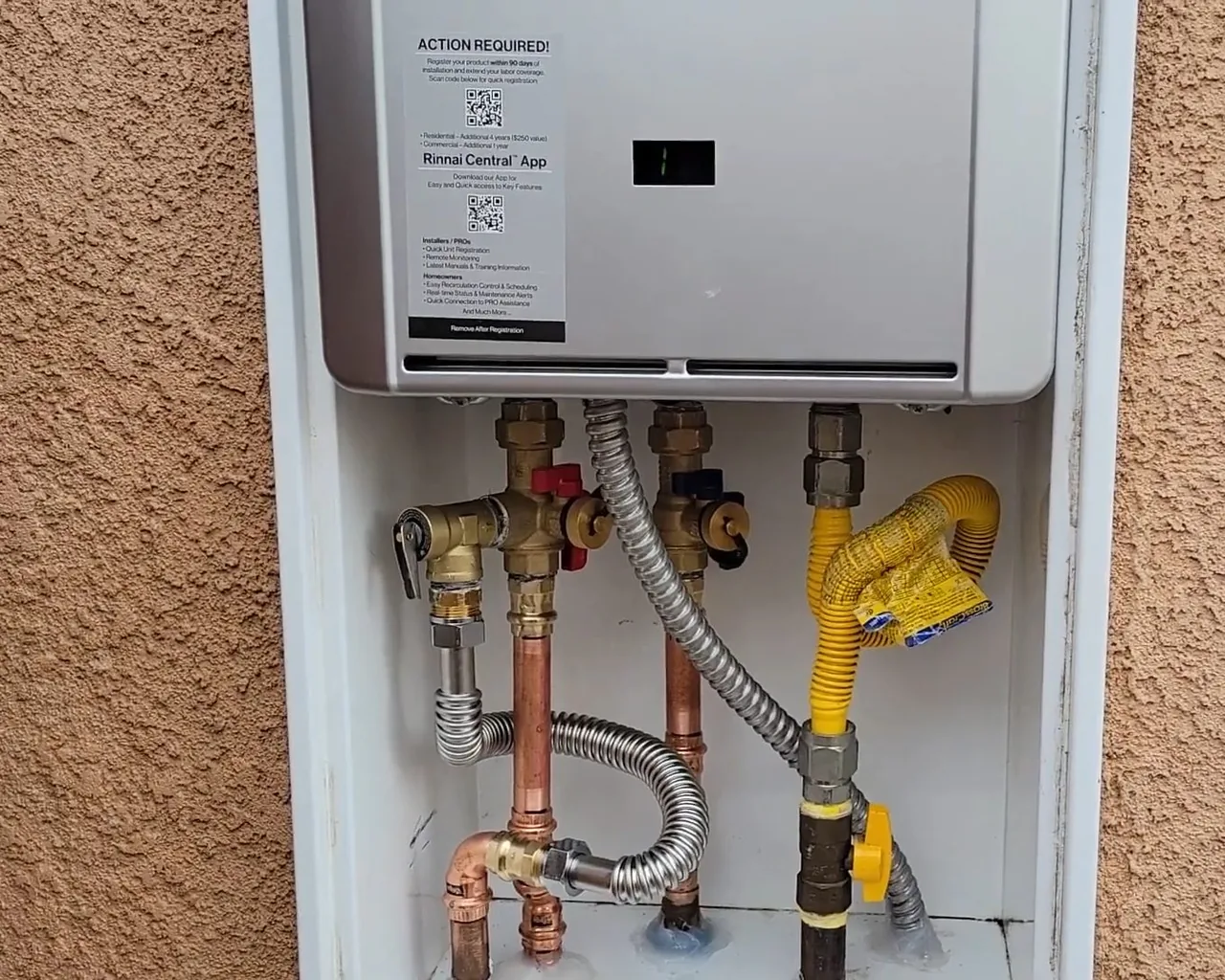
The answer rests on the house more than the heater. A tankless unit asks for three things: enough gas pressure and volume, a path for exhaust and a way to drain the condensate. Electric models skip the gas and venting but need a large circuit.
| Question | Why it matters | Who answers it |
|---|---|---|
| Is the gas line large enough? | A tankless heater burns a lot of gas at once, and a small line starves it. | The plumber checks the line; the utility, UGI, supplies the gas |
| Where does the exhaust go? | The unit needs a sealed vent to the outside, and often a new wall opening. | The plumber and the code official |
| Can the unit drain its condensate? | High-efficiency units make acidic water that must reach a drain. | The plumber |
| Is the flow enough for your fixtures? | Several showers at once can exceed what one unit delivers. | The plumber, from fixture count |
Tank or tankless: when to pick each
A tank is simpler. A tankless unit is a better fit when space is tight, when the tank is at the end of its life and the gas line can already feed a new appliance, or when the household uses hot water in a steady stream.
- Choose a tank when the gas line, vent or panel would need major work and you want the lowest-effort swap.
- Choose tankless when you want a smaller footprint and the house can carry the extra load.
- Think again if several fixtures run at once most mornings and the flow rating is close to what you use.
The water heater installation page explains sizing for a tank. For the gas side of a switch, see the gas line guide.
Retrofit work that surprises owners
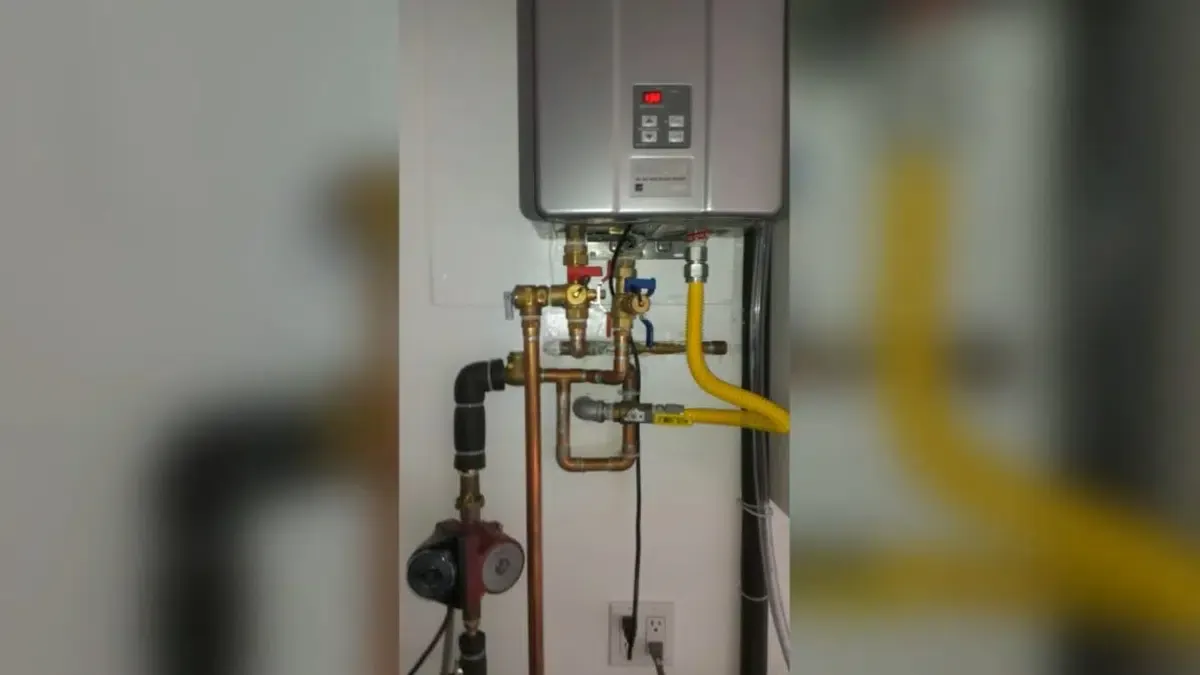
Converting from a tank is not a plug-in swap. The old vent is often too large or the wrong type. The gas line may need replacing with a larger pipe. A condensate drain may need a pump if no floor drain is nearby.
- A larger gas line from the meter to the heater.
- New venting through the wall or roof, sealed to the outside.
- A condensate line to a drain or a small pump.
- A new outlet or circuit for the controls and the fan.
- Isolation valves so the heater can be flushed later.
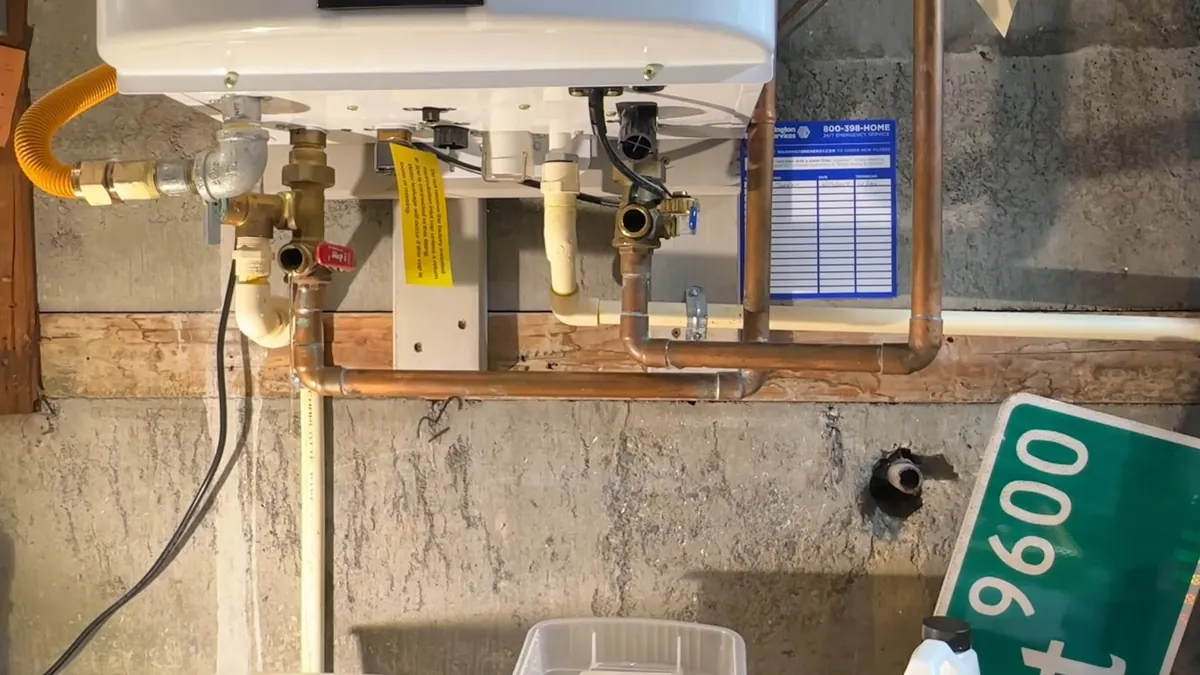
Ask for a list of every item the retrofit adds, and the reason behind each. A written list lets you compare the job with a plain tank swap, and it shows which items the unit requires and which are choices.
Troubleshooting and repair
Tankless heaters show an error code on the display when something fails. The code points toward a flame sensor, a vent problem, a flow sensor or a scaled heat exchanger. Write the code down, because dispatch and the plumber will both ask for it.
- Cold water sandwich: hot water, a short cold burst, then hot again.
- The unit starts and shuts off after a few seconds.
- An error code on the display.
- Hot water only at one fixture, or very low flow.
Do not reset the same code over and over. A repeated fault is the unit asking for service, and with gas it can be a safety shutdown.
Describe how long the fault lasts, because a failure that clears after a minute differs from one that persists.
Flushing and maintenance
A tankless heater should be flushed on a schedule the maker sets. The flush clears scale from the heat exchanger, which improves flow and prevents shutdowns. Whether your water leaves much scale depends on your supply, so ask the plumber what they see inside your unit rather than assuming.
The inlet screens and the condensate trap also need an occasional look. A plumber can do all three in one visit, and isolation valves make the job quick.
Have the plumber point out where the isolation valves, the inlet screen and the condensate trap are. Then you know what a service visit should cover, and you can spot a quote that leaves one of them out.
If you find scale inside the unit, test the water before buying any equipment. The water softener page explains how testing works and what each kind of treatment does.
Ask which makes the plumber installs and who supports parts for them.
Permits and gas capacity
UGI is the gas utility that takes gas odor calls here, and the plumber confirms the line's capacity before ordering a unit. Ask the plumber whether the job needs a permit. Bethlehem's permit application lists water heater work, and other towns set their own rule.
Source: UGI service information; City of Bethlehem plumbing permit application. Read 2026-10-30. Confirm with the plumber.
A tankless heater draws far more gas at once than a tank, so the capacity question has two parts: the pipe from the meter to the heater, and the meter itself. The plumber checks the first, and the utility decides what the second can supply.
Ask the plumber to list the gas load of the new unit and of the existing appliances in the written plan.
Tankless water heater questions answered
What is a tankless water heater?
A tankless water heater heats water as you use it, so there is no stored tank. It switches on when a tap opens and shuts off when it closes. It needs enough gas or power to heat the water on the spot, which is why the gas line and the vent decide whether a house suits one.
Is tankless better than a tank?
Neither is better in every house. A tank is the simpler setup. A tankless unit saves space and can supply a long run of hot water, but it needs more gas, venting and sometimes a larger line. A plumber who has seen your basement can tell you which fits.
Does a tankless installation need a permit?
Ask the plumber before the work starts. The City of Bethlehem permit application lists water heater work, and other towns set their own rule, so confirm with the borough or township office. A new gas line or vent is more likely to draw an inspection than a like-for-like swap.
Does tankless run on gas or electric?
Both exist. Gas models need a gas line, a vent to the outside and a condensate drain. Electric models skip the gas and vent but draw a lot of power and need a heavy circuit. Check the panel and the gas supply first, then choose the fuel that fits the house.
Tankless heater problem in Bethlehem?
Call (610) 904-7596. A dispatcher answers, asks where you are and what is happening, and sends the call to a plumber in our network serving your area. Plumbers are independent and responsible for their own work.